The Definitive
Retatrutide Resource
Plain-English answers about LY3437943 — the first triple GIP/GLP-1/glucagon receptor agonist. Phase 3 trial results, how it works, side effects, and the latest 2026 research.
Independent and peer-reviewed. Also covers how the drug compares to Wegovy, Zepbound, CagriSema, and Foundayo. No product sales.
New to Retatrutide?
What Is Retatrutide?
Understand the basics of this investigational triple-agonist peptide and why it matters.
Read article 02Mechanism of Action
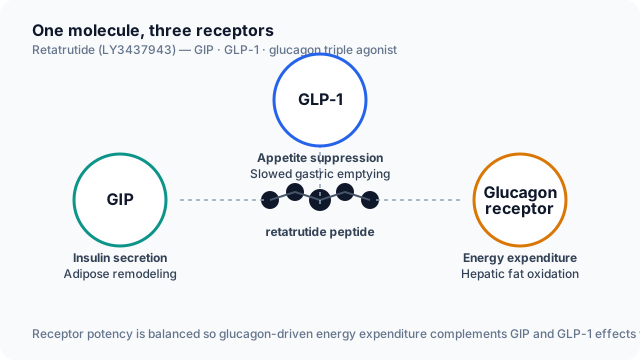
Learn how the drug activates GLP-1, GIP, and glucagon receptors at the same time.
Read article 03Safety Overview
Review the side effects, dose-by-dose adverse events, and tolerability data from clinical trials.
Read articlePhase 3 in 2026 at a Glance
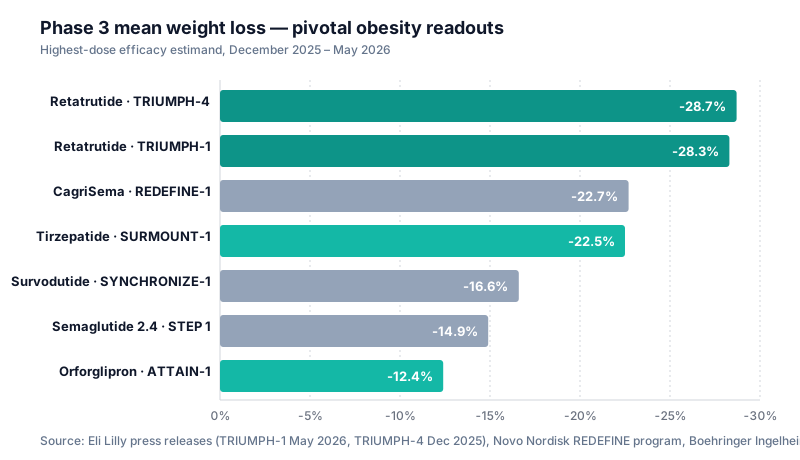
Mean percent body weight reduction at the highest tested dose, efficacy estimand. Cross-trial comparison only — no head-to-head data are available between retatrutide and other agents.
Pivotal program complete · BLA planned Q1 2027
Five positive Phase 3 trials, from -20.8% in diabetes to -28.3% in obesity
On July 23, 2026 the last two pivotal trials reported: TRIUMPH-2 (-20.8% at 12 mg in 1,152 adults with type 2 diabetes) and TRIUMPH-3 (-22.6% in 1,949 adults with severe obesity and heart disease). Eli Lilly now plans a Biologics License Application in the first quarter of 2027. TRIUMPH-1 (-28.3%) and TRANSCEND-T2D-1 were presented at ADA 2026 in June.
- -22.6% weight and -37% triglycerides with established cardiovascular disease (TRIUMPH-3)
- Dysesthesia at 12 mg: 7.3% and 6.4% in the new trials, versus 20.9% in TRIUMPH-4
- 45.3% of TRIUMPH-1 12 mg participants lost at least 30% of body weight
- -73.1% knee-pain and -60.6% sleep-apnea reductions (nested baskets)
Featured Knowledge
Retatrutide (Reta) Week by Week: Results Timeline, Week 1 to 80
Reta week 2, week 4, week 6, 12 weeks in: what trial data show at each point, from 1% in week 1 to 24.2% at 48 weeks and 28.3% at 80 weeks (12 mg, investigational).
How to Get Retatrutide: Clinical Trials, Access, and Availability
Not approved as of September 2026. The two legitimate routes: clinical trials and Lilly's narrow expanded access program. BLA planned Q1 2027; decision 2027-28.
Safety Profile of Retatrutide: Comprehensive Overview from Clinical Data
A thorough review of retatrutide's safety profile based on Phase 1, Phase 2, and Phase 3 TRIUMPH-4 clinical trial data, covering gastrointestinal adverse events, dysesthesia, laboratory findings, cardiovascular signals, hepatic effects, and outstanding safety questions.
Explore Topics
Knowledge Base
In-depth articles on pharmacology, mechanism of action, safety, and outcomes.
Clinical Trials
Phase 2 and Phase 3 trial data, enrollment status, and key results.
Comparisons
Side-by-side analysis with semaglutide, tirzepatide, and other GLP-1 agonists.
Blog
Analysis, commentary, and updates on retatrutide research and development.
FAQ
Answers to the most common questions about retatrutide.
Glossary
Definitions of medical and scientific terms used across the knowledge base.
Trial Developments
TRIUMPH-1
TRIUMPH-1: Phase 3 Pivotal Obesity Trial of Retatrutide (Results-Published)
The pivotal Phase 3 obesity trial of retatrutide. Topline results announced May 21, 2026: 28.3% mean weight loss at 12 mg over 80 weeks (n=2,339 adults with obesity or overweight + at least one weight-related comorbidity, no diabetes). All three doses met primary and key secondary endpoints. The largest pivotal weight-loss readout in the retatrutide program to date.
Retatrutide Dose Escalation Optimization
Phase 3b Dosing Optimization Study for Retatrutide
Investigating different retatrutide dose escalation schemes to optimize efficacy-tolerability balance.
SYNERGY-OUTCOMES
SYNERGY-OUTCOMES Trial: Retatrutide for Liver Disease (MASH)
SYNERGY-OUTCOMES is a Phase 3 trial testing retatrutide and tirzepatide vs placebo to prevent major adverse liver outcomes in high-risk MASLD/MASH. What it studies.
Latest from the Blog
Retatrutide Black Market, Late 2026: Lawsuits, FDA Letters, Counterfeits
Lilly sued six sellers, the FDA named 'GLP-3 Reta' in warning letters, grey-market users lost half the trial weight, and a counterfeit vial was 8x semaglutide.
Retatrutide Expanded Access: Who Qualifies and How Doctors Apply
Lilly's pre-approval program (NCT07629401): BMI 35+ despite maximal approved therapy, two serious complications, no accessible trial. Physician-requested only.
TRIUMPH-2 and TRIUMPH-3 Results: Retatrutide in Diabetes and Heart Disease
Eli Lilly's July 23, 2026 readouts: -20.8% weight loss with type 2 diabetes, -22.6% with cardiovascular disease, dysesthesia 6-7%, and a BLA planned for Q1 2027.
What Is MASH? Retatrutide's Liver-Disease Program Explained
How retatrutide targets MASH liver disease: the glucagon-driven liver-fat effect, plus what the SYNERGY-OUTCOMES and MACELD Phase 3 trials aim to prove.
How Was Retatrutide Discovered? The Triple-Agonist Story
Retatrutide was built by adding glucagon action to the GIP/GLP-1 backbone behind tirzepatide. Inside the discovery science of the first triple agonist.
When Was Retatrutide Created? Timeline 2016 to 2026
Retatrutide entered human trials in 2019, about 7 years ago. A year-by-year timeline from its 2016 design to 2026 Phase 3 data — still investigational.